

In today’s world of increasingly complex global challenges, traditional project-based solutions are often not enough. Issues like climate resilience, inclusive economies, and sustainable development require a shift toward systemic thinking and collaborative innovation. Endeva, a pioneer in systems innovation, has developed a practical approach that blends systems thinking, innovation methods, and generative facilitation to drive meaningful, collective impact.
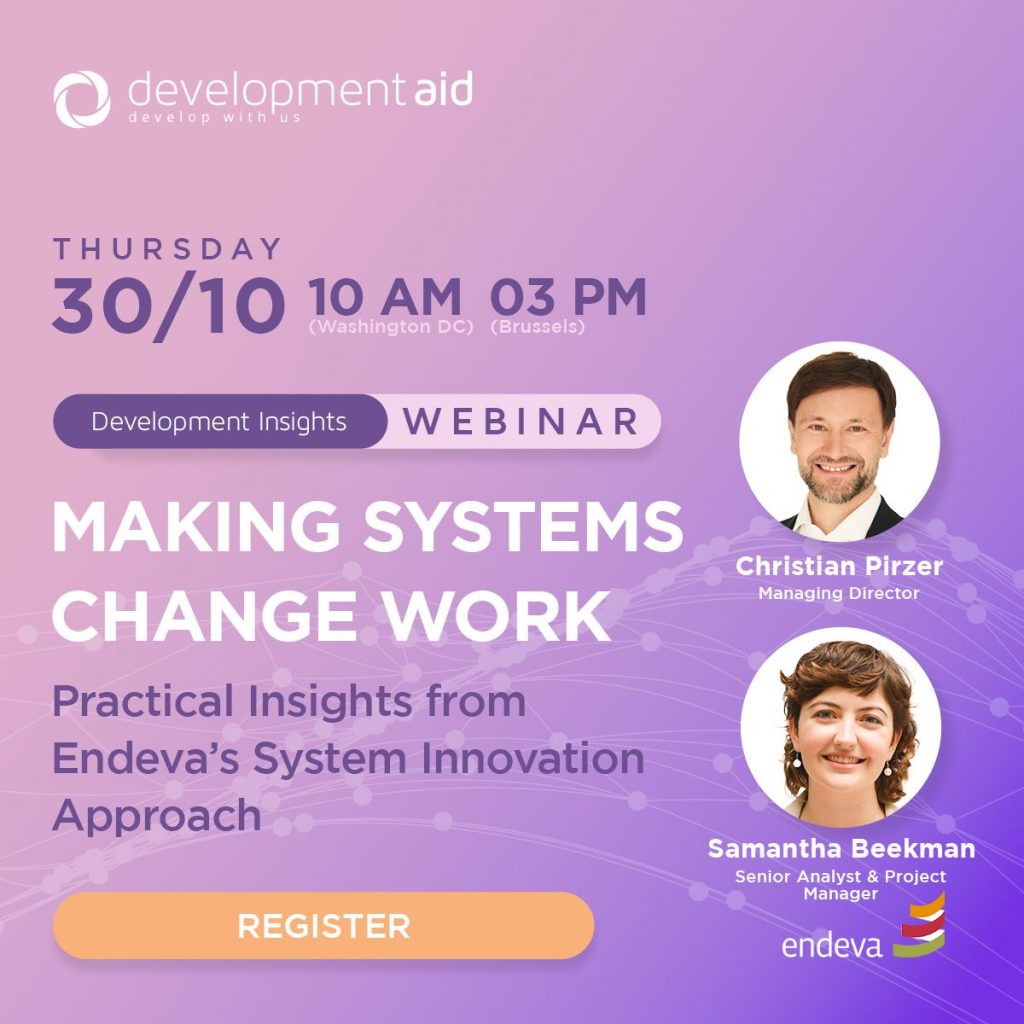
On October 10, Endeva Managing Director Christian Pirzer and Senior Analyst & Project Manager Samantha Beekman joined Elizaveta “Lizzie” Gładun DevelopmentAid for the webinar, “Making Systems Change Work: Practical Insights from Endeva’s System Innovation Approach,” to discuss exactly this. During the session, they shared how the Endeva methodology is applied in real-world contexts. Through a live case study interview, interactive reflection, and practical entry points for collaboration, the discussion offered practical insights into how systemic approaches can drive innovation, build partnerships, and create lasting impact in a complex development context. Therefore, the discussion has been transcribed and documented below to spark further discussion and ideation around these topics.
Christian and Samantha were delighted to share their experience implementing systems change, innovation and generative facilitation through the lens of their work with the Millers for Nutrition coalition. Read more below and share your thoughts with them at c.pirzer@endeva.org and s.beekman@endeva.org!
1. Welcome & Introduction
Samantha:
Hello everyone, and welcome to our session “Making Systems Change Work: Practical Insights from Endeva’s System Innovation Approach.”
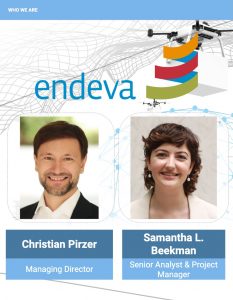
I’m Samantha Beekman, Senior Analyst and Project Manager at Endeva, and I’m thrilled to guide you through this conversation with my colleague Christian Pirzer, Endeva’s Managing Director — and someone who has spent more than a decade helping organizations and partnerships make real, systemic change happen.
Christian:
Hi everyone — great to be here, and thanks for joining!
I’ve been with Endeva for about 12 years now. Endeva was founded back in 2007 — so 18 years ago — with the goal of helping businesses become more inclusive and sustainable.
In the early years, we worked a lot on business model innovation — helping SMEs and corporates integrate social and environmental goals into their core business.
But what we quickly learned is: individual organizations can’t transform systems alone. So, about a decade ago, we made a shift — from focusing on single business models to looking at business ecosystems and the systemic structures that shape them.
Today our mission is to bring innovation methods into systems thinking — combining creativity, structure, and collaboration to make transformation processes work.
We are a small organization that focuses on giving strategic advice to companies, foundations and development partners and facilitating cross-sector partnerships — For us, this means: bringing together new constellations of actors who often have not worked together before.
And we do this work across four systems: Agri-Food, Energy, Health, and Mobility — always with the same question:
How can we facilitate systems innovations that serve people and planet?
2. Framing the Session: Millers for Nutrition
Samantha:
Wonderful, thank you, Christian.
So today we’re going to unpack what it really means to work systemically — how Endeva approaches complex change in practice, and what we’ve learned from doing this in different systems and partnerships.
We will try to do this with as many practical examples and insights as possible so you can harvest some insights and strategies for your own work across contexts!
To anchor our conversation, we’ve brought you an example of our work at Endeva that cuts across our different approaches at Endeva to facilitate system innovation: the Millers for Nutrition Coalition or M4N.
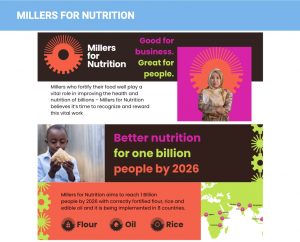
M4N is a private-sector-led initiative to improve food fortification and combat malnutrition. The Coalition was initiated by the Gates Foundation and officially launched in 2023. Today, M4N has over 600 milling partners and almost 100 ecosystem partners across Africa and Asia.
The goal is to reach 1 billion people with better nutrition through fortified staple foods by 2026, focusing on Africa and Asia and three key commodities: flour, oil, and rice.
Food fortification is the process of adding essential micronutrients to food products. This can be particularly helpful in areas with high rates of malnutrition where populations have a concentrated diet and can make huge strides toward reducing malnutrition for over 2 billion people worldwide.
Food fortification is already widely recognized as a successful strategy to combat malnutrition, and the practice is even mandatory in most countries around the world. However, despite these measures, compliance among millers was limited, regulations were ineffective, and awareness of fortification benefits – both for nutrition and for economic growth – remained low.
This is where the M4N came in: we brought a key group of actors together to think about the ways we could shift the system, not just by adding another ineffective regulation or piling fines on noncompliant millers who were already operating on thin margins, but by fundamentally changing their incentives to fortify and shifting the dynamics at play.
Christian:
We believe that M4N is a great example of Endeva’s systemic work because we used our system innovation approach throughout the process of building the coalition:
- We started with a system-mapping process to understand why compliance remained low despite fortification mandates in many countries.
- We designed spaces for partners — including competitors — to co-create solutions together.
- We built trust and alignment through reflective exercises, open dialogue, and even playful methods inspired by Theory U.
The result is not just a shared platform through the Millers for Nutrition coalition, but a shared movement — millers, suppliers, and regulators seeing themselves as part of one system.
Samantha:
Now, before we dive into the M4N and Endeva’s systems practice methodology in further detail, we’d love to get a sense of who’s in the room with us today.
👉 Could you share in the chat:
- Why are you here today, and what would you like to learn?
- Have you already worked with a systems approach yourself?
- If so, where have you seen the benefits — and what have been some of the challenges?
Or, if this topic of systems practice is new for you:
- What do you hope to better understand about systems change today?
3. What Is System Innovation
Samantha:
Christian, while the participants introduce themselves in the chat, maybe we can start with the obvious question:
What exactly is “system innovation”?
Christian:
At Endeva, when we talk about system innovation, we mean creating change not just within individual organizations, but in how organizations interact — how they work together, make decisions, and influence one another. Donella Meadows’ ICEBERG Model (under the surface: patterns of behaviour, systems structures, mental models)
So, we look at how to shift the relationships and dynamics between existing actors so that the system as a whole starts to produce better outcomes. In my experience, this often has to do with changing the incentive structures within a system to allow existing players to play a different game. A game that benefits people and planet. So, it’s not about new players, but about existing players working differently.
And that’s exactly what we saw in the case of Millers for Nutrition Coalition.
Many of the actors in this space — the millers, the premix suppliers, blenders, regulators, NGOs and dev partners — had been active for years. They were all doing good work, but the results weren’t adding up. Even though fortification is mandatory in over 140 countries, compliance levels remain low.
So our first step was to bring the relevant actors into a (often virtual) room and develop a shared understanding of the system together. Many of them already knew each other — but they had never really looked at the problem together.
We started with two simple questions:
- What are the dynamics that lead to today’s outcomes? Why is it that, despite everyone’s efforts, fortification still doesn’t work as intended?
- And in a second step: what would need to change — in processes, relationships, or incentives — for this system to work better for both the millers and all the other stakeholders?
In these two questions you can already see 2 key elements that are at the heart of Endeva’s System Innovation approach:
- Developing a shared understanding of how the system really works — the patterns and dynamics that produce current results.
- And even more importantly: Working co-creatively with all relevant actors to imagine and build a different future.
And a 3rd characteristic of our approach is that we start from the assumption that all resources that are needed for the change already exist — they just need to be reconnected and aligned in new ways.
That’s what we mean by “re-connecting the dots.”
Samantha:
I love this about our approach — it’s almost like we’re moving from fixing symptoms to changing the entire system’s operating logic, getting to the roots of an issue for real, sustainable change.
Christian:
Exactly.
And once people start seeing those dynamics clearly — the feedback loops, the bottlenecks, the missing connections — the conversation completely changes.
It’s no longer “Who’s responsible?” but rather “What can we shift together?”
That mindset shift is the real entry point for systemic change.
5. From Framework to Practice – Our Approach
Samantha:
You often describe Endeva’s system innovation method as combining systems thinking with innovation tools and generative facilitation. What does that look like concretely?
Christian:
Exactly — we describe our approach as a mix of three pillars:
- Systems Thinking – to understand complexity and interconnections.
- Innovation Methods – to experiment and prototype new solutions.
- Generative Facilitation – to help people connect and collaborate in meaningful ways and activate partners as whole people. Open mind / open heart / open will
We use a lot of different frameworks — from Theory U, to Design Thinking, Systems Practice, Hypnosystemic Communication, and others. But it’s never about the tool itself; it’s about creating the right space for shared experiences, insights and actions.
What I would like to show you today is one process that we apply in almost all our system innovation projects — our system mapping process.
It’s a practical example, and a good one to show how our approach differs from many conventional ways of working.
Over the years, we’ve refined it into quite a standardized format: usually two online workshops of about 2–3 hours each.
Because the sessions are virtual, we can invite a very broad range of stakeholders — which is a huge advantage. It gives many more people the chance to be part of the dialogue to co-own insights and to define a role or connection to what they do.
Let me briefly walk you through what it looks like.
Step 1: Who needs to be in the room?
We start by identifying all key actors who are part of the system — or could be part of the solution. In the case of M4N these were: micronutrient providers, millers, NGOs, dev partners, and others who already play a role in the fortification ecosystem.
The goal was to have a diverse mix of perspectives — those who shape the system, those affected by it, and those who can influence change.
Step 2: Creating the system map
In the first workshop, we co-create the system map.
Samantha:
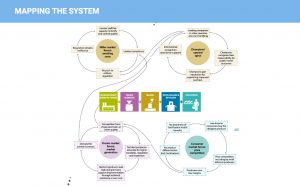
Let me share a visual for those who may not be familiar: this is an actual system map we used in the M4N.
Christian:
Some of you might have seen very complex causal loop diagrams before — and they often look intimidating. We try to keep our system maps intentionally simple, because for us the real value lies in the process.
Together with the participants, we identify about four to five feedback loops that really capture what’s driving the current situation – This goes one level deeper than the usual “barriers” or “enablers” people tend to mention because we look at them in a causal loop. What are the forced and dynamics?
We collectively explore:
- What are the underlying causes of these barriers?
- What reinforces or counteracts them?
- How do these loops connect with each other?
Then we bring them together into one collective system map — a visual representation that helps everyone see the bigger picture and the interconnections.
When we look at the map we developed for M4N you can see 4 core feedback loops in the system. For example the “miller market forces of avoiding costs”. In a situation with limited compliance, there is relatively little push to enforce regulations. The existing regulation remains largely ineffective and – as a consequence – we see limited staff / lab capacity to fortify and control quality. This in result leads to limited compliance. But you also see that there is an “upwards spiral of miller champions” that get recognized and celebrated for their quality fortification efforts and can inspire others to follow. All these loops are also interlinked and connected.
Step 3: Finding the leverage points
In the second workshop, we focus on leverage points — the places in the system where well-designed actions can trigger larger change.
We ask questions like:
- Where could we intervene to shift the dynamics? What could we do to make these loops spin in a different direction?
- Which of these leverage points could we, as a group, realistically address together? Who can do that?
- And who else might need to join us?
We design the process in a way to always give actors the possibility to come in – because as soon as people see the bigger picture, they start recognizing who’s missing.
Samantha:
Okay, this all sounds quite technical and analytical – can you tell us about some of your “ah-ha” moments or how you make it real and personal for those involved?
Christian:
It’s analytical but the magic happens in the process
Now, this all sounds quite analytical — and yes, it is a structured process. But what I find most beautiful is what happens in people’s minds during these workshops.
At some point, there’s always that aha moment.
It’s the moment when participants realize:
- “Actually, no one is to blame” (It is often a very natural assumption: “If only the government would be xyz” or “But the big companies could do xyz”. But no: People realize No single actor is to blame and “no one can fix this alone.”
- But also: “As a collective, we can make a change.”
That shift from blame to shared feeling of collective agency and responsibility is incredibly powerful. It creates a sense of collective ownership and connection behind the issue.
The system map then becomes a shared reference point — almost a “map of our shared understanding.” And this shared reference point can help facilitate collective action immensely. Often, organization that work together might speak about the same topics but mean different things or have different hypotheses why the system looks as it looks. They don’t have a collective map as reference.
In our case, the map is like a living artifact that we can come back to whenever discussions get stuck. It helps us talk about complex dynamics with a common language and a shared mental model.
The important thing is: The map is not a report that someone from the group hands out to others to read. It’s something that we have built together — and that makes all the difference.
Samantha:
Exactly. For us, system mapping is never a one-off exercise. It’s the start of a continuous learning journey. Once we move forward from the map and the leverage points, we translate them into a Theory of Change and then into concrete projects or programs. But we always treat the process as an experiment — we learn as we go:
- What interventions actually work?
- What dynamics are shifting?
- What unexpected effects emerge?
The map itself evolves — it’s dynamic, not static.
And that’s exactly how we see systems change: as an ongoing collective learning process rather than a linear plan to be implemented.
6. Building Trust and Ownership
Samantha:
However, this means that we actually end up building these strong, personal relationships with participants throughout the process. Not only the concrete steps of the process itself, but other, more abstract components, like trust between partners, is key in such a complex partnership.
Can you tell us about how you built trust through the Millers for Nutrition coalition?
Christian:
Yes — trust is absolutely central, and it doesn’t happen automatically.
We build it on three levels:
- Personal connection – creating spaces where people can show up as humans, not just roles.
- Professional partnership management – clear structures, follow-ups, and reliability.
- Empathy for internal pressures – understanding what drives each partner and what constraints they face.
We use reflective tools like listening triads (open mind, heart, will), journaling, and in-person workshops that mix personal reflection with concrete action planning.
It might sound “soft,” but the outcomes are concrete:
- Higher ownership,
- Stronger commitment,
- And greater resilience when challenges arise.
We’ve learned that these so-called nice-to-have moments — a shared meal, an informal talk — often make or break a systemic initiative.
Samantha:
How do you keep that energy alive once the initial excitement fades?
Christian:
That’s the big question. A few things help:
- Co-ownership: We involve partners in designing the Theory of Change, the governance model, and the learning agenda.
- Visible progress: Celebrating milestones keeps motivation high.
- Diverse engagement: We engage different departments within organizations — so the initiative doesn’t rely on a single champion.
And we accept that momentum is cyclical — what matters is keeping the relationships strong enough to carry you through the low phases.
7. Closing Reflections
Samantha:
Christian, to close:
What’s the difference that makes the difference in making systems change work – these small elements which serve to create big impact when trying to practically implement systems practice?
Christian:
I’d say it’s three things:
- Bring the whole system into the room — including voices that are usually missing.
- Combine head, heart, and hand — analysis, connection, and action.
- Embrace complexity — not as a barrier but as a source of learning and innovation.
When people see themselves as part of a larger system and feel agency within it, that’s when transformation starts.
Sami:
Beautifully put. Before we wrap up, take a moment to reflect as the audience: What is one thing you’re taking away from today — and how might you apply it in your own work?
Christian:
Thank you all for joining and for your great energy in the chat. If you’d like to learn more about our approach, visit endeva.org or connect with us on LinkedIn — we always enjoy continuing these conversations.
Sami:
Thank you, Christian — and thank you everyone for spending the hour with us. Let’s keep working together to make systems change work!
Get in touch:
Learn more about Endeva: https://endeva.org
Follow Endeva on LinkedIn: https://www.linkedin.com/company/endeva
Sign up for the Endeva newsletter: http://eepurl.com/dhcfIf
Connect with Christian Pirzer, Managing Director to continue the conversation: c.pirzer@endeva.org
More resources:
Endeva’s ii2030 approach: https://ii2030.com
Acumen Systems Practice course: https://acumenacademy.org/course/systems-practice/
Si Network: https://www.systemsinnovation.network/
Collective Impact Forum: https://collectiveimpactforum.org/
